Sunday, December 31, 2006

Quito 2 - last day of trip
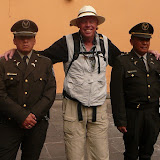

Goodbye to Robt & Tom imitating Indian boy racing Machu Picchu bus downhill. Went to beautiful old town, independence square-“statue of liberty” depicts defeated Spanish lion & church(a cross)-shows victorious condor(S America)–plaque honors heroes of 1809 war vs Spain. Went to Monasterio de San Franciso,still used by Franciscans-Visited “most beautiful church in S America”-interior covered w/gold leaf-recently restored after earthquake.Bussed to Equator monument (200 m off according to GPS’s. Claim: excavations show indigenous ancients knew exact line!! Lunch at La Ronda. Mike’s washing-machined passport questioned at airport. Mike mimed washing & got through-scary, bcz Tomás had left. Roger tarried behind-taken by police-random search & released.We worried about takeoff bcz of 9000’ altitude, thin air.Takeoffs & landings only in morning/evening, when air is denser. Great LAN dinner.Got to Miami at 11:45, slept 2 hours, rescheduled earlier flight to LA via DC. Long flight home-surrounded by noisy Japanese tourists. It was good to get home.

Quito 1
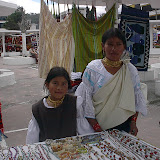

Rode bus on Pan American Hwy on way to Otalvo- Tomas told us about worldwide rose industry which ships all over world-bought Panama hats-bought dresses for granddaughters at Otalvo market-old lady followed us around, begging so we couldn't shop comfortably-followed group to bus and banged on windows-Marilyn swamped by women selling things-armed guards at bank - lunch at 300yr-old Hacienda visited by Bolivar-sparkling-violet-eared hummingbird at window-exterior chapel wall mosaic of Don Quixote or of conquistadors subjecting natives (not sure which)-saw janitor with broom made of sticks, reeds -huge fireplaces-Then to Cotacachi leather town:bought wallets, fanny back-went to Calderon: a town of figurine artists in dough-bought xmas ornaments, parrot. Dinner in old town Quito at luxurious, if somewhat ostentatious, Teatro restuarant.

Galapagos 5
Galapagos 5

Woke up in Puerto Ayora harbor on SE shore of Santa Cruz-many boats, cruiz ships there-said goodbye to Carlos-boated to island-met Julian who had apparently celebrated the previous night-funky stores near dock-bussed to Darwin Station research facility-Ayora is a very quaint town-some spanish influence-Saw Opuntia (Prickly Pear Cactus tree), many tame tortoises which had been pets (tortoise-don't swim; turtles swim-terrapins do both) -Julian caused them to raise their heads for cihin scratching-he used to ride them as a kid-bought some souveniers, maps, gifts for grandkids-bus ride the length of Santa Cruz to ferry and then to Balta Airport-saw first wild tortoises-hectic Baltra airport scence-got flight changed so it was non-stop to Quito vs thru Guayaquil-bought "i love boobies" shirt for Todd-said goodbye to Julian-landed inQuito-quiet dinner w/Nancy & Jim at Marriot-rest of gang went across the street for sumptious, cheap dinner w/gluttonous-size-servings.

Galapagos 4
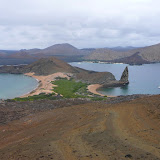

Panga ride to scenic and volcanic Bartolome Island and climbed 300 stair steps to the observation area near the summit. The bay and harbor below was a backdrop for the fiilm "Master and Commander." The Island is quite dry, being in the rain shadow of Santiago. A circular inlet at the base of the stairs, just barely breaking the surf, is the residual of an old crater. The plants on the island were widely separated by poisons they exude against competitive plants. Mary Lynn and part of the group snorkeled in the bay after the hike. In the afternoon we had a panga ride through Black Turtle cove and its mangrove forest where we saw white-tipped sharks,young Lava Herons and many green sea turtles some of which were engaging in a four hour copulation (the men in the party thought that was much too long)while other males swam frantically around apparently awaiting their turn. We floated through some narrow entanglements, one of which the boat pilot resisted, but Julian insisted. Rocky, long boat ride to Puerto Ayora before dinner. We celebrated Lenore's birthday, though I doubt her condition made the cake, which Tomas made, appetizing.
Galapagos3

Wet
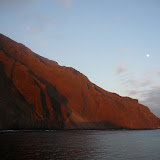
landing at Punta Espinosa, Fernandina Is.which rose 1 m. in 1981 from volcanic activity- stepped over piles of Iguanas-saw a flightless cormorant couple shading their chick with diminutivie wings; -beautiful orangish Lava Cactus against black lava; a whale skeleton, stingrays, turtles. Later, went to Tagus Cove,Isabella Is.-climbed 133 steps to Darwin salt Lake-of mysterious origin- Julian shooed away male sea lion basking on stairs. Cove a stopping place for sailors-left graffiti onrocks, some dating 1836. Afterward floated along cliffs in increasing rough water, visited caves,saw Chocolate Chip & Devil sea stars and other marine life in clear waters and on adjacent cliffs. Observed Iguana head-butting another off 15-foot rock into sea; Swallow-Tail gull; Yellow Warbler, Noddy (Sooty) terns, spiny sea snails-penguins turned their backs to us. Returned to Coral II, sailed for Bartolome Is-passed beautiful Vincente Rocha vermilion cliffs glowing in sunset- moonrise behind. Took a group picture. Had a cocktail Party as we crossed equator.

Galapagos2- N Santa Cruz-Red Beach, Rabida Is, Pt Egas

loat
ed along N shore Rabida-saw Galapagos sea lions, pups, bluefoot boobies in synchronous dives, Lava Heron & chick, Frigate birds-attempting theft from Boobies which stayed on sea to protect catch-wet Landing red beach-saw Green Urchin, little girl w/sea lion pups-sea lions swallow rocks to dive deep-adopt orphans-group snorkeled. Great dolphin show as boat sailed. Afternoon dry landing on black beach at Pt. Egas-old salt mine-tame galapagos hawk on concrete block-saw Whimbrel, American Oyster Catchers, Darwins Toilet (spout in lava)-Ruddy Turnstone-sea turtles-female lava Lizard w red belly-fur seals-gorgeous tide pools,Sally Lightfoot crabs

To Galapagos!

Galapagos1-flight from Quito via Guaquail to Balta and the Coral II & hike around Dragon Hill

Flight to Balta Is, Galapagos from Quito via Guayaquil-bussed from Balta airport to nearby bay-watched sleeping sea lions while awaiting panga to Coral II-sailed on Coral II to Dragon Hill on N side of Santa Cruz-rough dry landing-light green lagoon-saw first sea Iguanas crawling in sand-and saw Bahama ducks,
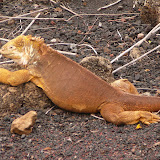
Flamingoes in shallow shoreside pond-Flamingoes are filter feeders-red dry rough volcanic rock ground-Prickly Pear evolved a tree trunk with thorny trunk to ward off Land Iguanas-the latter recovering from over-hunting, grazing on island-saw Incense Tree used in Mass-orange-red-brown breeding colors on male Land Iguanas which are 3-4 times larger than Sea Iguanas-live in burrows-eat prickly pear pads (beaver tails)-saw Hooded Mocking bird-almost tame-and is carniverous-back to boat & cocktails w/Captain-dinner w/Marilyn, Jack, Roger, Lenore

Cuzco, Saqsaywaman, etc.

Cuzco -Saqsaywaman, Cuzco Square, Cathedral and the Monasterio Hotel

Took pics of town from hill above it-then to Saqsaywama, an archeology dig of Inca fortress-foundation shaped like lightning bolt -hiked to top of Inca structure across from main structure-great views including White Christ donated by successful Palestinian silk manufactures in 1945-Nancy sick-Jim took her to hotel-some lunched at home of Cuzco native (Maria)-Mike sick before lunch-bussed back to Monasterio-ML ate someGuinea pig-Maria's husband an art-teacher-met grandson Christian-Janet gave him Baltimore Orioles uniform shirt-ML shopped /women-in evening, Jim, Mike & ML had omelettes at nearby cafe-ML & Mike took a quick evening shopping tour -photographed Cathedral of Cuzco. Up at 4:30AM next morning-Ml sick-took plane to Lima -waited for 3 hrs then flew to Quito-met Tomas who sent ML Gatoraid-Tomas said travelers from Peru always sick-dinner at Marriot-Sat by Tomas who gave good overview of politics in Ecuador

Saturday, December 2, 2006

Machu Picchu

(You are invited to caption the pictures to correct mistakes and omissions. Likewise the diary. The names of the overwhelming number of symbolic structures cannot be learned in a day!)

We left our beloved digs at the Sol y Luna lodge in the Sacred Valley with its gorgeous flowers, mountain backdrop, comfortable cylindrical lodges, great food and service, to take the train at Ollantaytambo to Aguas Caliente where we caught a bus to take us up the mountain to Machu Picchu. The train followed the Rio Urubamba and the parallel Inca trail. Many villages and their concomitant steep agricultural terraces were visible from the train, some of them still used by the local Quecha – speaking mountain people.

The steep dirt road to Machu Picchu had 13 switchbacks with many scary turns. The bus drivers were obviously skillful and experienced enough to drive at a rate which was frightening. We arrived at the only hotel, the Machu Picchu Sanctuary Lodge, and had our lunch accompanied and then joined the mobs crowding into Machu Picchu. In spite of the crowds, the place took our breath away with its beauty and placement in a huge saddle between the mountains of Machu Picchu (which the ruins are named after) and Huayna Picchu (Ancient mountain and young mountain.)

Notable scenes: The sun calendar, from which the seasons were determined; the quarry of the stones, echo rock – a carved reflection of the area; the temple of the sun; the temple of the Condor; the clever water supply system, sacred rock.

We stayed at the lodge one night and left after lunch the next day. This gave us one solitary evening and morning sans crowds. This is the only way to do it. The indescribable mystery and magic of the place is best experienced without crowds. The evidence indicates that Machu Picchu is a place of worship since apparently few people lived there and the terraces would have provided much more food than a place of this size would warrant.

After a lunch accompanied by a group playing Andean music, we took the bus back down the frightening road. An Amerindian boy ran down the steep steps and encountered the bus at each of the 13 switchbacks, waving all the while. He came into the bus at the bottom at Aguas Caliente and we gave him tips.

We killed time by perusing the colorful market at Aguas Caliente and caught the train in the late afternoon for a long ride to Cuzco along the Urubamba river. We arrived late in the evening and worked our way through the aggressive peddlers to the El Monasterio hotel.

Machu Picchu hike to Gate of the Sun


We began the hike to the Gate of the Sun in late afternoon, stopping often to marvel at the stupendous views as the sun set gradually over Machu Picchu and Putucuci mountain-almost a religious experience. We also viewed the steep13 switchbacked bus road from Aguas Caliente to Machu Picchu, the surrounding mountains including Huayna Picchu and Putucuci and the Rio Urubamba snaking around the base of Machu snf Huayna Picchu and its neighboring mountains.

The trail was paved with stones–a bit hard on the joint and feet. At times, a little acrophobia hit us as we gingerly stepped around corners or went up stairs with a lot of “exposure”, a mountaineering term meaning it will scare the hell out of you!The altitude gain was 1000 feet.

The Gate of the Sun was mostly a beautiful Inca trapezoidal arch sans capstone.It lacked the close-fitting stones characterizing sacred places. The views from the Gate are the first of Machu Picchu that Inca Trail rekkers see, and they are marvelous. The Inca trail on the other side of the saddle quickly is swallowed up in chapparal.

After sunset, we began the descent. Our guide, Reuben tarried, saying he would catch us. We were surprised to see him smoking and teased him.

At the bottom of the trail the exit gate was locked. A light push opened it and we went to the hotel, cleaned up and had another great dinner.

Tuesday, November 28, 2006

Sacred Valley 2


We left Sol y Luna for a high-altitude harrowing ride along a narrow road to the village of Maras where the Amerindians produced salt in evaporation ponds. A warm saline stream comes out of the mountains and is diverted into the salt ponds by numerous irrigation-type gates. The length of time of the evaporation is closely controlled to produce the salt. Rain can interfere with this planning. The walk from the bus to the salt ponds was along a steep wooden stairway which provided us with some exercise. Halfway down there was a store with various goods, snacks and water.

Returning to the top of the stairs and the bus, we stopped and visited the little chapel with its vibrant interior colors and a tapestry. We met a young European who had just arrived in a cab. His cabby told him that he would not take him back to the Sacred Valley unless he paid twice the agreed-upon price (I think that was the amount.) Jaime pointed out that the hike back down the valley containing the salt ponds was only a few miles, and the young man took his advice.

Our next stop was at Moray, site of an Inca agricultural research station. A series of circular terraces had been carved out of a huge depression in such a way that some were in shade some of the time. The temperature of each terrace differed by 2 degrees. The circular nature of the terraces provided differing sun exposures. These two factors enabled the Incas to try different crops at varying conditions and probably hybridize them.

We took a bus ride which gave us views of the rolling high grasslands of the Andes, the Amerindians either herding sheep or plowing with a wooden plow and oxen. They were all dressed in the traditional and often colorful garb of the mountain people. The next stop was Chinchero, located at an altitude of 12000 feet. This was an Inca town and judging from the inhabitants, their descendants still live there. It had a plaza overlooking the town and contained a beautiful church built upon in Inca temple (when the blocks which make up the foundations fit perfectly, then this indicates a temple and not a mere dwelling or public building.) Many women inhabitants of the town were marketing their colorful shawls, ponchos, blankets, etc. to the tourists. Ancient terraces, still used for crops, stepped down into the town proper.

Next stop was lunch at a luxurious restaurant in the Sacred Valley, not to far from our Sol y Luna digs. The food was plentiful and excellent. We sat at a long table with a painting of the last supper above us with a guinea pig, a favorite food of the mountain people, on a dish in the middle of the apostles’ table. We saw a couple of cute kids with their mom outside the restaurant, all dressed in traditional clothes.

From there we went to the still thriving Inca 15th century town of Ollantaytambo, complete with an ancient but effective water distribution plan and narrow streets. We climbed the steep temple of the sun. It is nestled in the northern part of the Sacred Valley and at the confluence of the Urubamba(which eventually goes to Machu Picchu and into the Amazon) and another river. It is a well-watered, fertile area surrounded by precipitous mountains. A huge sculpture of an angry Tunupa, preacher of knowledge, knower of time, frowns from a mountain just east of the town. It is bracketed by his temple further east along the face of the mountain and a grain storehouse west of him. The storehouse was located at such a seemingly inaccessible point to protect it from marauders and to catch the drying winds to keep the grains from spoiling. The light falling upon him gives the illusion that he is asleep part of the day and alert otherwise. The light also lights up his temple during the summer solstice evening, contrasted with the darkness of the surrounding cliffs. Most buildings in Ollantaytambo and in other Inca areas are constructed so as to emphasize the solstices, the equinoxes or the stars at certain times of the year.

We ascended the temple of the sun to the fortress on top of it, where the Incas defeated the Spanish twice before their last leader escaped to the Amazon and was slain there. Cliffs were adorned with cactus for defensive reasons. How the Incas managed to transport the huge monoliths used in the construction of the temple-fort is a mystery, though there is a clear path from the river up the N side of mountain holding the temple. The type of rock used does not exist locally.

As we prepared to leave, a political rally was breaking up. The tricycle-type surreys were parked at various angles all around. Women in the bright traditional clothing sat against a wall with small children.Musicians were playing from the podium platform and very colorfully clad (lots of reds) residents of the Sacred Valley were leaving on bicycles, piling into truck beds or apparently waiting for someone to pick them up.

One of our last sights at Ollantaytambo in the evening was the silhouette of Machu Picchu, looming mysteriously in the dim and cloudy distance.

We finished the day with a stop at a Chicaheria where some of us sampled the local liquor (previously fermented with saliva) but Jaime drank an entire stein. Then it was home to dinner at our favorite residence of the trip, Sol y Luna.

Thursday, November 23, 2006

Sacred Valley of the Incas -day 1


Sacred Valley 1

We took a morning flight from Lima to Cusco and had lunch and met our guide, Jaime. We then began our journey to the Sacred Valley. We were surprised by the vegetation above 10,000 feet – similar to central California. No conifers were evident, but plenty of non-native Eucalyptus trees, generally despised because of their prodigious use of water in this relatively dry area..

Apparently coniferous forest’s existence is a function both of the altitude and the distance from the equator of a given area.

A great stop was made at the Awakancha weaver’s village and store. We saw Vicunas, Guanacos and Alpacas but no Llamas (their fur is not optimal for weaving.) Mike, having forgotten to pack a warm hat, purchased a facsimile of one worn by the mountain people. None of the hats available were as beautiful as those worn by the weavers, who demonstrated their skills, dye and weaving yarns. Mike surmised that those beautiful hats were reserved for indigenous people, not tourists.

Our next stop was for a high view of the stunning Sacred Valley of the Incas. It is a fertile valley surrounded by huge mountains with terraces. This left many of us wondering how people could possible access some of these terraces. Truly, they are part mountain goat.

In the Valley we shopped at the colorful Pisac market where we were immediately inundated, if not harassed, by sellers of pictures, beads, jewelry,etc. Strolling through the market we saw merchandise such as ponchos, blankets, Peruvian musical instruments, etc. I noticed that some of the fluorescent orange colors of the fabrics were far removed from those of the Awakancha weavers and were probably factory made.

Quecha is the native language spoken by the locals but some are proficient in Spanish and English as well.

Later we endured an endless but interesting “Offering to Mother Earth” which apparently is a purification ceremony preparing us for our visit to Machu Picchu. Marge and Dick broke into nearly uncontrollable and infectious giggling, thus giving us some comic relief from the beautiful but lengthy ceremony. The ceremony was ended with a Pisco Sour, the Peruvian national drink, and a small fire of the materials from the ceremony. The smoke was supposed to send the prayers to mother earth.

We arrived at perhaps the most beautiful hotel of the trip, Sol y Luna, consisting of separated circular roomy bungalows with tile roofs, adobe-brown walls, some stained glass windows, ceilings with beautiful beams. It all wassurrounded by lovely gardens. We had dinner in the central dining area, which was furnished modern furniture with a hint of the old Spanish style.

Wednesday, November 22, 2006

Lima


Click picture for access to group.

October 25th, 2006 - Lima

We stayed in a beautiful Marriot hotel room overlooking the sea and situated in a very upscale district of Lima (quite unlike the Melodia in our previous stay in Lima!) We met the non-Amazon part of our group, namely Agnes Chigwin, Bob and Susi Hebblewhite, Janet Sanford, Roger and Lenore Gaire, and Sharon Colson after they deplaned from an all night flight from Miami early in the morning. We had an incredible buffet breakfast and some free time in the morning. Mary Lynn & Nancy went to a classy shopping district across street from the hotel. Mike opted out because he was feeling queasy. Jim searched for internet cafes and found a cheap one in contrast to the Marriot’s outrageous prices. Their laundry prices were similarly outrageous.

Reuben boarded us on to a luxury bus to the Museo de Rafael Larco Herrera through beautiful residential areas as well as the poorer districts. Here, we got a taste of Lima driving etiquette – or more properly, the lack thereof. Someone, perhaps Reuben, said that driving carefully in Peru could cause an accident. It was similar to driving in Iquitos, but jostling with cars and buses instead of motorcycle-driven surreys. We had a luxurious lunch at the museum cafĂ© after which we toured the museum rather hastily. We first visited a gallery of pre-inca erotic sculptures which made some of us (men) feel quite inadequate!

We then visited the a part of the Museum with thousands of gold, sliver and copper masks, pots, and utensils from the dry N Coast of Peru . These had apparently escaped the greedy Conquistadores. We saw a gorgeous ancient tapestry surprisingly preserved by the dry north coast and quipus ( knotted strings indicating a record of events or quantities of various items.) The museum made it clear that advanced civilizations held sway in Peru long before the Incas.

Reuben gave us a short political history of Peru. We learned that Peruvians MUST vote or can't cash checks, leave the country and will pay a fine for not voting. Political advertisements in advance of the elections were ubiquitous.

We took the luxury bus to the Plaza de Armas where we observed the Government palace built on the site of a previous palace which Pizarro founded. We toured the beautiful Lima Cathedral holding Pizarro's remains and containing beautiful statues and paintings, most by indigenous artists taught by the European masters. Most of the art was beautiful, and some was beautiful but bloodily grotesque, which seems to be a characteristic of much indigenous Latin American art. There we learned that Susi was a descendent of Pizzaro. We visited the San Francisco Church with its musty catacombs (which I was only too happy to leave) and the 16th century Santa Domingo church (once a convent – still a convent?) (I’m not too sure I have the churches right. Corrections welcome!)

We finished with dinner at Jorge 's & Antonio's restaurant. We had a Pisco sour (before I realized they were made with raw egg) and a great dinner and desert.

Monday, November 20, 2006

Amazon - Day 3


CeibaTops3

Click on picture and then click "Slide Show"

(P: - thanks for telling me about the errors)

We had a pre-breakfast tour around the lodge grounds; saw Leaf Mimicking Moth and Katydid. We went on the river again to visit the Manco Capac mestizo village like the one Juan was raised in. Juan told us courtship rules: boys live 6 mos with girl’s family until accepted then couple returns to his village and has a house built for them by the whole community and then they have a raucous party with much drinking of the local brew.

After passing several thatched roofs but well kept houses on stilts (necessary because Amazon yearly floods the jungle) we visited the elementary school in the center of the village. We introduced ourselves and the 1st & 2nd graders reciprocated. We noticed from the blackboard that they had been studying math inequalities! The children sang the Peruvian nat'l anthem to us. We examined the drying rice in the village center and boarded our boat again.

In the afternoon we took our leave of Ceiba Tops lodge and went up the Amazon to Iquitos on the Amazon Queen. We saw numerous water taxis, fisherman, shore side villages and boat graveyard. We disembarked and boarded our rickety bus for the ride through Iquitos to the Airport. We observed the mostly dilapidated buildings except for some beautiful churches and parks. We also saw more political ads on buildings and the massive traffic jams caused by the motorcycle-driven surreys. Arriving at the airport, we saw once again the disturbing wreck of a jet on the side of a runway. We then flew LAN airlines from Iquitos to Lima Marriot. LAN flights are always pleasant with candid-camera-type films (thus needing no language) and free wine and food.


Amazon - Day 2


Click on picture and then click "Slide Show"

Ceiba Tops 2

We left Ceiba tops on a small boat on the Amazon. The destination was a tea-colored tributary called, I think, Black River. On the way we saw pink dolphins and numerous birds including the greater smooth-billed Ani, Red Capped Cardinal, Caracara, Oriole Blackbird, Yellow-Headed Blackbird, Slate-Colored and Black-Collared Hawks- about 50 species of magnificent birds. Mike nearly jumped out of the boat with excitement.

Back at Ceiba tops we had a pancake breakfast and then we were on the river again to go Piranha fishing. On the way, we encountered native fishermen who were Juan’s friends. One had a cut on his finger from a Pirinha. Their boat was full of them plus cichlids, and a gorgeous Tiger Catfish.

Unfortunately, Jim was ill on the boat. We fished for Piranha with pieces of steak. They attacked the bait in schools and most of the time were successful in avoiding the hook. One member of the group caught one and Juan and the boat driver caught several.

We visited a native family. They lived in a thatched hut and had a pet 3-toed sloth in a tree in front of the hut so that evil spirits would attack it first. The mother showed us an Anaconda. The little boy, Christian, is an expert Anaconda catcher. We purchased some trinkets from the family. Behind the house was a beautiful pond full of hyacyths. At night, Caymans became visible. Gorgeous butterflies swarmed in the mud on the shore.

We had Piranha and fish chowder for lunch back at Ceiba Tops.

After Lunch we visited a primitive tribe, the Yagwa, and watched a welcome dance inside their beautifully constructed communal building with a thatched roof. They invited several of us to dance, which several of us, including Nancy, Jim, Mary Lynn and others, did. They were small, largely bare-breasted with a red paint on their faces to ward off the mosquitos. Some of them were on the sidelines, nursing babies.They had escaped, or refused, the Spanish-enforced Christianization of the area.

We had a blow-dart demonstration exhibiting tremendous accuracy. Jim and others tried it with less success. We then shopped among some of their crafts and took a photo of the tribe. On the way back to the boat, we observed he huge, whitish,beautiful Kapok softwood tree, used for making plywood. Juan gave us a demo of gliding ants, which when dropped from various heights, right themselves in mid-air and land on all six legs. Some saw an Iguana near the Kapok tree. While Mike, Juan and others were searching and beating the bushes in order to flush it, Jim and Robert, uninterested stood in back of the group. The Iguana dropped to the jungle floor, and making a tremendous noise with its feat on the jungle floor, rushed headlong between the startled Jim and Robert. They did not know what was coming at them out of the jungle – a Jaguar, perhaps?

On the way back across the Amazon, we saw many pink dolphins again. The pet Guan (turkey-like bird) awaited us near the dock. A gorgeous moth was on the railing near the dining hall.

Later in the evening, we saw a cute but poisonous little white caterpillar on the hand railings. After dinner some of us took a night walk with Juan and saw a huge Tarantula, walking sticks, a white boa with black spots, leaf-cutter ants and army aunts which we were brushing off our legs for half an hour when we returned to the dining hall. We had a great dinner of chicken, catfish, vegetables and fruit. Mary Lynn met her ex-colleague, Carol, Pigeon after dinner.

Up Black River tributary - 50 bird species -fished for Piranhas -went to an indigenous home w Sloth, Anaconda, giant water hyacyths and butterflies-Yagwa Indian Village -dance -crafts -blow dart demonstration-photo of family - Robert encounters running Iguana -Pink Dolphins-Nightwalk - poison caterpillar-giant tarantual - walking stick - white boa - army ants on legs - leaf cutter ants

On the Amazon - Day 1


CeibaTops 3

Click on picture and then click "Slide Show"

At 5:30AM Sunday October 22, we were awakened by a knock on our door and at 6AM we boarded a small boat to Indiana It was s0named because a resident when to school in Indiana in the US and when he returned the town named itself.) The town was having a market day. Some of the villagers laughed at this weird group of tourists. Mangy dogs wandered among the stands.

We boarded a two wheel wagon with a cloth roof pulled by a motorcycle for a wild trip along what appeared to be a sidewalk to the Napo river, a huge tributary of the Amazon. In fact, it was a sidewalk, a bicycle path and a road for these vehicles (I’ll call them “surreys” though in place of a horse was a motorcycle.)The surrey careened past pedestrians, bicyclists and similar vehicles, passing numerous houses painted with political advertisements for mayoral candidates. We were being transported to a another boat on the Napo.

We were let off in a desolate place near a primitive dirt-floor house and several indigenous people nearby – or possibly mestizos. We began to wonder if we were going to be dinner for someone.

Walking a short distance, we then saw our boat waiting on the river. We were greeted by a Pedro who turned out to be the boat pilot. Twenty minutes later, the next surrey arrived. Gradually the rest of the group arrived. Apparently Juan had trouble hiring surrey drivers.

We boarded the Explorama boat on the Napo R. and motored to the Napo lodge for a breakfast of French toast with cane syrup and the usual array of fruits and juices, some of them unfamiliar. Here we saw a capybara, some trumpet birds and a yellow-tailed Oro Pendula bird. A light rain started.

We began the hike toward the canopy walk. We saw a viciously thorny palm tree, many epiphytes and a monkey pod tree on the way. The rain intensified.

We began our journey on the 13 separate suspension bridges connected by several “ stations” – partially covered platforms in the trees. Only 3 people were allowed on a suspension bridge and only 4-5 on a station at a time. The bridges gradually got higher, reaching 118 feet above the forest. A few people, including Nancy, had acrophobia and did not look down. The apprehension was increased by the slippery surface of the bridges and their swaying as we traversed them.

Drenched, we plowed through puddles and mini-streams to the ACTS research lodge where we wrung ourselves out, rested, observed a poison dart frog in Juan’s hand and then proceeded on the long hike through the downpour back to the Napo lodge. Robert remarked that this was “soaking the rich.” Many of us were shivering during our lunch at Napo lodge.

After lunch, we observed a medicine man describing his healing herbs. He performed a healing ceremony on a member of another group. A friendly green parrot decided to talk to Juan who talked back to him. It was hilarious.

From Napo lodge, we sailed for 1 ¾ hours down the Napo to the Amazon and then upriver on the latter, passing Indiana and numerous Amazonians fishing and their huts and boats on the way back to Ceiba tops.

Some of us took a water slide into a pool and frolicked their while two gorgeous red macaws flew overhead. Mike went bird watching and missed the macaws.

A great dinner was followed by a music and dance performance the indigenous youngsters in a group called Indiana Mia. Juan MC’d the event. The dances were emulations of rice growing and harvesting and making the liquor popular in the area.

Surprisingly, Mary Lynn met a Santa Barbaran ex-colleague, Carol Pichon – the 2nd night in which she encountered Santa Barbarans. Juan pointed out a leaf-mimicking frog and a millipede near the lodge.

Midland Senior Cabin Hike

Met Bonnie and George at River Grill in Solvang. Jera, still suffering from a dental operation joined us. Afterwards we went on a 3 mile, 80...